


Professional, Reliable, and Energy-Efficient Heating and Cooling for Okanagan Homes
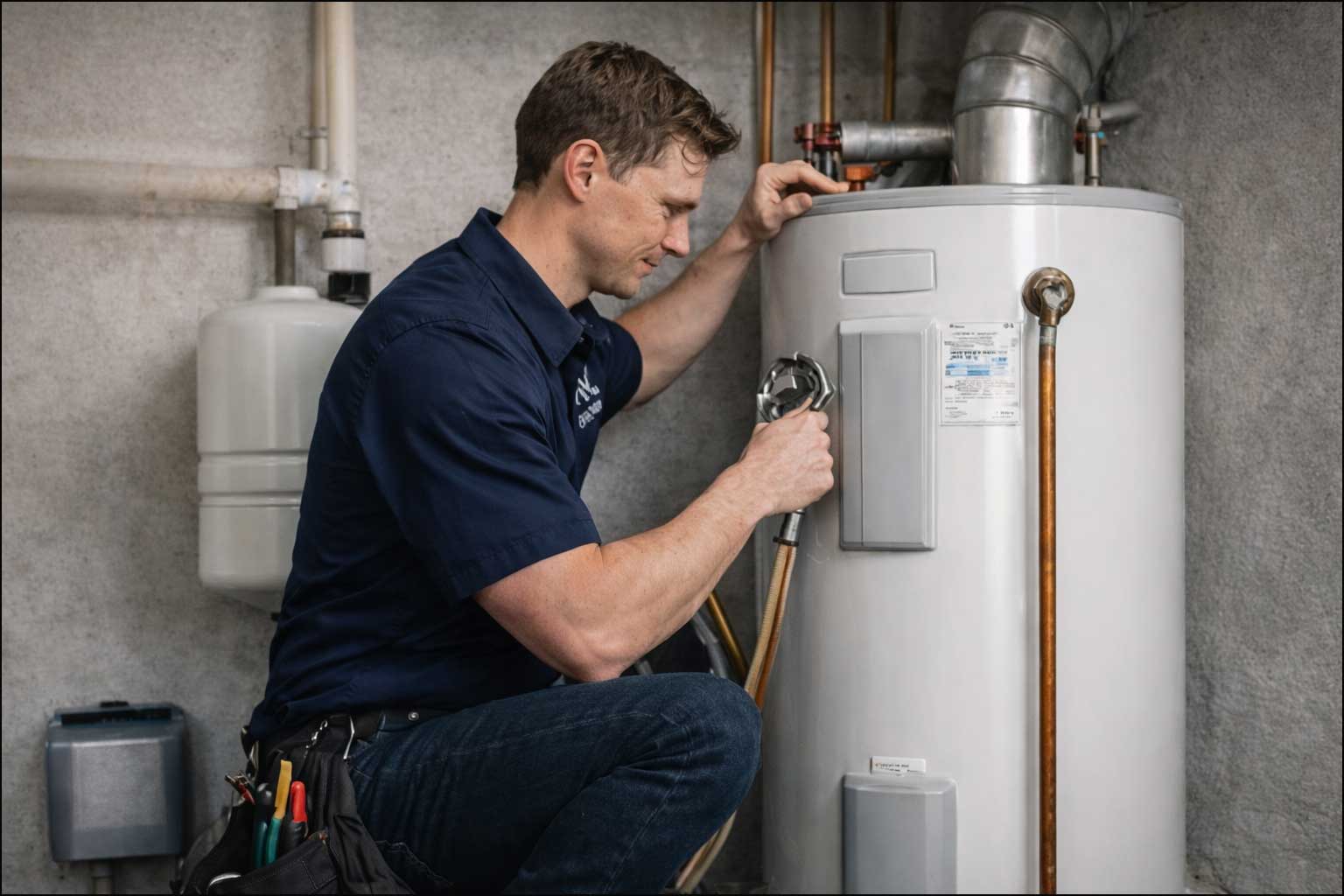
Hot Water Tanks in Kelowna & the Okanagan
Compare Your Water Heater Options
Looking for reliable hot water in your home? Coral Home Comfort offers expert Kelowna water heater installation and Okanagan hot water tank services to ensure you never run out of warm water. In this guide, we’ll help you understand your water heater options – from traditional electric or gas hot water tanks to modern tankless systems – along with their pros and cons, energy efficiency, lifespan, and signs it’s time for a replacement. You’ll also learn about factors that affect performance (like recovery rate and first-hour rating) and discover available energy rebates in BC. With Coral Home Comfort’s trusted, no-pressure service and decades of local experience, you can count on friendly guidance to choose the perfect hot water solution for your home
Types of Water Heaters We Install
Every home is different, so we install and maintain a range of water heater types to suit your needs. Our team can help you compare electric vs. gas vs. tankless water heaters and recommend the best fit for your household size, budget, and efficiency goals. Below we outline the most common options and their benefits.
Electric Hot Water Tanks (Conventional Storage)
Electric hot water tanks are a popular choice for many Kelowna homes. These units use electric heating elements inside an insulated tank to heat and store water. When you open a hot tap, pre-heated water flows out from the tank, and the tank then refills with cold water to be heated for next time.
Pros: Electric tanks typically have a lower upfront cost and a simpler installation (no gas line or venting required). They run quietly and convert nearly 100% of their electrical energy into heat, meaning no fuel is wasted through exhaust. Electric models are often a good choice for smaller households or in areas without natural gas service.
Cons: Heating water with electricity can be slower and sometimes costlier than using gas, especially for larger families. Electric tanks usually have a slower recovery rate, meaning it takes longer to reheat the tank after hot water is used up. If demand is high (multiple showers, laundry, etc.), you may need a larger tank to ensure adequate supply. Also, like any tank system, electric heaters can have standby heat loss – they lose some heat through the tank walls over time, though good insulation helps minimize this.
Lifespan: Most electric storage water heaters last around 10–14 years with proper maintenance. If yours is over a decade old and showing problems, it may be time to consider a replacement (more on that below).
Gas Hot Water Tanks (Conventional Storage)
Gas hot water tanks use natural gas or propane burners to heat the water. They are very common in the Okanagan, where many homes have natural gas service (FortisBC). The tank stores hot water so it’s ready whenever you need it, and a thermostat controls the burner to maintain the set temperature.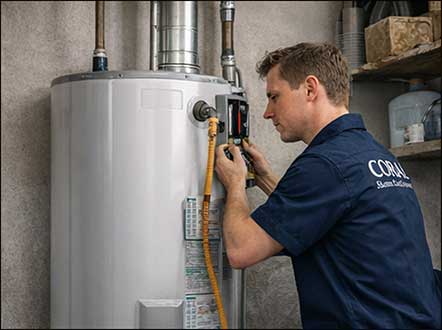
Pros: Gas water heaters heat up and recover hot water faster than electric models. This means a smaller gas tank can often serve a household that would require a larger electric tank. Natural gas is also typically less expensive per unit of heat than electricity, so operating costs can be lower. Standard gas heaters can work even during power outages (if they have a pilot light), ensuring you still get hot water. They also come in many sizes, and high-efficiency gas models (including condensing tanks) can save energy by capturing more heat from the exhaust.
Cons: Gas units usually have a higher initial cost than electric and require proper venting of exhaust gases. Some heat is lost up the vent (chimney) as “standby loss” when the burner is off, making their overall efficiency a bit lower than electric tanks. Installing a gas heater may involve running or updating gas lines and ensuring adequate ventilation, which should always be handled by professionals for safety. Additionally, gas heaters need occasional maintenance (e.g. checking the burner and vent) to run safely and efficiently.
Lifespan: Traditional tank-type gas water heaters generally last about 8–12 years with good care. Hard water, lack of maintenance, or heavy use can shorten this lifespan, while regular maintenance (like flushing out sediment) can help maximize it.
Tankless Water Heaters (On-Demand Systems)
Tankless water heaters (also called on-demand or instantaneous heaters) are a modern option that heats water only when you need it, rather than storing hot water in a tank. Coral Home Comfort installs tankless models for homeowners who want endless hot water and better energy efficiency. These units are compact wall-mounted systems (fuelled by natural gas or electricity) that heat water as it passes through a heat exchanger.
Pros: The biggest advantage is endless hot water, you won’t “run out” of hot water, since the system heats water on-the-fly. Tankless units also eliminate standby heat losses, making them significantly more energy-efficient than storage tanks (by about 8%–34%, according to the U.S. Department of Energy). This can mean lower energy bills; an ENERGY STAR® qualified tankless heater could save around $100 or more per year in fuel costs. Tankless systems tend to have a longer lifespan (often 15–20 years or more) than tank-style heaters. They are compact, saving space in your utility room, and many offer high-tech features like digital controls.
Cons: The upfront cost is higher, tankless heaters and their installation (especially gas models that may need special venting or a gas line upgrade) can be a bigger investment. While the hot water is endless, there is a limit to flow rate; a single tankless unit can typically supply 2–5 gallons per minute of hot water, so if multiple showers and appliances run simultaneously, a single unit might struggle. In large homes or households with high simultaneous hot water demand, you may need multiple tankless units or a hybrid system. Tankless heaters also perform best with regular maintenance (such as annual descaling if you have hard water) to keep them efficient and ensure a long life.
Lifespan: Tankless water heaters often last 15–20 years or longer with proper maintenance. Their parts are often replaceable, which can extend their service life. Regular flushing to remove scale will protect your tankless unit and keep it running like new.
Energy Efficiency and Performance Factors
Choosing a hot water heater isn’t just about tank vs. tankless – it’s also important to understand performance specs that affect your hot water supply and energy costs over time. Here are some key factors:
Recovery Rate: This is how fast a water heater can reheat water after the hot water has been drawn. Gas heaters usually have a higher recovery rate than electric ones – for example, a standard 50-gallon gas tank might reheat in about 30–40 minutes, whereas an electric tank could take 60–80 minutes to recover. A faster recovery means you’ll wait less time for hot water to “come back” after a heavy usage (like back-to-back showers). If your household uses a lot of hot water in a short time, a high recovery rate or a larger tank (or tankless system) will be important.
First-Hour Rating (FHR): This metric, found on the yellow EnergyGuide label of tank heaters, indicates how much hot water a tank can supply in one hour starting with a full tank. It combines the tank’s capacity and its recovery speed. Gas models typically have higher FHR than similar-sized electrics because they heat water faster. For instance, an FHR of 70 gallons means the heater can provide 70 gallons of hot water in the first hour of use. We help you size your tank so the FHR meets your family’s peak hourly hot water needs – ensuring morning showers, laundry, and dishes all get enough hot water without running cold.
Tank Size & Insulation: For storage heaters, size matters. Larger tanks hold more hot water, serving more simultaneous uses, but take longer to heat up. A tank that’s too small may run out frequently, while an oversized tank could waste energy keeping water hot that you don’t use. We’ll recommend an optimal size based on your household. Insulation quality is also crucial – a well-insulated tank retains heat longer and reduces standby heat loss, so you waste less energy keeping water hot. Modern tanks come with built-in foam insulation; additionally, insulating the pipes or adding an insulating blanket to older tanks can improve efficiency.
Energy Efficiency (EF/UEF Ratings): Water heaters come with efficiency ratings. Traditional electric tanks often approach 90-95% efficiency (since nearly all electricity goes to heating water), while standard gas tanks might be around 60%–67% efficient due to heat lost in venting. High-efficiency gas units (condensing tanks or tankless) can achieve 90%+ efficiency. Tankless heaters, as noted, avoid standby losses and often have high efficiency ratings. Heat pump (hybrid) electric water heaters are a newer option that can be 2-3 times more efficient than standard electric models by extracting heat from the air, a great choice for those focused on long-term energy savings. We stay up-to-date on the latest efficient technologies and can explain the energy factor (EF) or uniform energy factor (UEF) of any unit we install, so you know what to expect in terms of operating cost and savings.
When to Replace Your Water Heater
Not sure if your current hot water tank is on its last legs? Here are some tell-tale signs for Okanagan homeowners that it may be time to replace the water heater:
Age over 10 years: Conventional tank water heaters typically last 8–12 years. If your unit is around a decade old (or more) and especially if it’s been needing repairs, it’s wise to start planning for a new one. Don’t wait for a complete failure – an old tank could leak and cause water damage if not replaced in time. Upgrading proactively also lets you take advantage of newer, more efficient models.
Rusty or discolored hot water: If you notice reddish-brown, cloudy, or metallic-tasting water coming from your hot water tap (while cold water stays clear), it’s a red flag. Rust inside the tank can tint your hot water, indicating the tank is corroding from within. 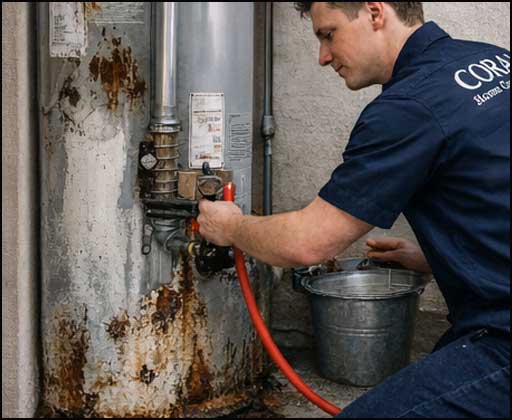 Eventually, that rust will eat through the tank walls. Once a water heater tank is severely rusted, replacement is the only real solution.
Rumbling or banging noises: Over time, mineral sediment builds up at the bottom of the tank (especially in areas with hard water). When the burner or element heats the water, that sediment can cause rumbling, popping, or banging sounds as it moves around. Excess sediment not only noise, it also reduces your heater’s efficiency and can accelerate wear. Flushing the tank might help; but if noises persist or sediment is thick, the unit may be nearing the end of its life.
Leaks or moisture around the tank: Any water pooling under or around the heater is a concern. A leak from the tank (especially from the bottom) often means the inner tank has rusted through, a condition that usually isn’t fixable and necessitates replacement. Sometimes, moisture may come from fittings, valves, or condensation, which a technician can check. But active leaks are urgent, turn off the power/gas and water supply, and call us right away.
Underperformance: If your hot water runs out faster than it used to, or isn’t as hot even with the thermostat cranked up, something is likely wrong. It could be a failing heating element or burner that might be repairable. However, if the unit is old, it may be more cost-effective to replace it with a new, properly working heater rather than investing in major repairs. Similarly, if you find yourself frequently calling for repairs on the unit, that money might be better spent on a new reliable system.
Tip: Regular maintenance (flushing the tank annually, checking the anode rod, etc.) can extend the life of your water heater and help prevent surprise breakdowns. Coral Home Comfort offers maintenance services to keep your unit in top shape but even with great maintenance, no water heater lasts forever. We’ll give you an honest assessment of your system’s condition and guide you on when a replacement makes sense.
Expert Installation & Maintenance by Coral Home Comfort
A proper installation is critical to the performance, efficiency, and safety of your hot water heater. With Coral Home Comfort, you’re getting licensed, experienced technicians who make sure the job is done right. We handle everything from removal of your old tank to precise installation and setup of your new one, including all plumbing and, if needed, gas connections. Our install team will ensure the unit is sized correctly for your household’s needs and that all safety features (like pressure relief valves and venting for gas units) are properly in place. A correct installation not only gives you hot water on day one, but helps your heater operate at peak efficiency and reduces the risk of future issues.
After installation, we don’t just disappear, we stand by our products and workmanship. Coral offers ongoing maintenance and support for all models we install. Keeping up with routine maintenance can dramatically extend the life of your water heater and keep it running efficiently. For tank heaters, we can schedule annual flushes to clear sediment, inspect the anode rod (which helps prevent tank corrosion), and check thermostats and valves. For tankless systems, we perform descaling (to remove mineral build-up) and ensure burners or heating elements are clean. Regular tune-ups not only prevent problems, they also ensure your unit maintains its energy efficiency and safe operation over time. And if you ever encounter an issue, our friendly technicians are just a phone call away, we even offer 24-hour emergency service for urgent problems, so you’re never without hot water for long.
Personalized Recommendations for Your Home
At Coral Home Comfort, we know that choosing a new hot water heater can feel overwhelming but we’re here to make it easy. Our approach is personalized to your home and lifestyle. We start by understanding your household size, hot water usage patterns, home size/layout, budget, and energy efficiency goals. Do you have a busy family that uses multiple showers in the morning? Do you prefer eco-friendly, lower-carbon appliances? Is upfront cost a big factor, or are you looking at long-term savings? We take all these factors into account.
Our team will walk you through the options in plain language, outlining the pros and cons of electric vs. gas vs. tankless (as we did above, but specific to your situation). We’ll calculate the right tank capacity or tankless flow rate needed so you won’t be left shivering in a cold shower. We can also discuss emerging options like heat pump water heaters if they fit your needs. No-pressure service is a core value for us, our goal is to inform and advise, not upsell you on something you don’t need. We’ll provide a clear, upfront quote for the equipment and installation, so you know exactly what to expect. With Coral’s knowledgeable staff (backed by over 30 years of service in the Okanagan), you can trust that the recommendation we make is truly the best for your home.
Save with Energy Rebates and Local Programs
Upgrading to a more efficient hot water heater not only lowers your energy bills, it can also put money back in your pocket upfront through rebates. Here are some rebate programs and incentives relevant to Kelowna and the Okanagan region:
FortisBC Rebates: FortisBC (our local gas and electric utility) often provides rebates to encourage high-efficiency equipment. For example, if you replace an old electric tank with a qualifying high-efficiency electric heat pump water heater, you can get up to $1,000 back. There are also rebates for income-qualified households – up to $2,500 for installing an ENERGY STAR® natural gas water heater for those who meet income criteria. These programs help offset the higher initial cost of efficient models and save you money long-term.
City of Kelowna Top-Up: Living in Kelowna has its perks – the city currently offers a $1,000 bonus rebate for residents who install a heat pump water heater (on top of provincial or FortisBC rebates).  This is part of local efforts to encourage energy savings and reduce greenhouse gas emissions. Our team stays updated on these offers, so we can help you navigate the rebate process and maximize your savings.
Manufacturer Promotions: Occasionally, manufacturers of water heaters (Rheem, Bradford White, Rinnai, etc.) run promotions or extend warranty upgrades for new installations. We’ll let you know if any such deals are available when you’re choosing your unit.
Long-Term Energy Savings: Even beyond one-time rebates, choosing an efficient model puts money back in your wallet through lower monthly bills. For instance, a tankless unit can save a few dozen dollars a month in energy, and a heat pump electric heater can use 50%–60% less energy than a standard electric tank. Over the lifespan of the unit, these savings really add up, essentially helping the new heater pay for itself in time. We’ll help you estimate and compare the operating costs of different options so you can make an informed decision.
When you work with Coral Home Comfort, we’ll make sure you’re aware of all the current rebates and financing options available. Saving energy is great for the environment and your wallet, and we love helping our customers benefit from these programs.
Now Offering Lennox Water Heaters
Coral Home Comfort now offers Lennox gas, electric, and heat pump water heater options for Kelowna and Okanagan homeowners. Whether you're replacing an aging hot water tank or exploring a more efficient upgrade, our team can help you compare the options and choose the right system for your home.
Explore Lennox Water HeatersYour Trusted Local Hot Water Experts
Coral Home Comfort is proud to be a locally owned company serving Kelowna and the Okanagan for decades. We combine small-town friendly service with expert knowledge to give you the best experience possible. Our technicians are fully certified and committed to doing quality work in your home – we treat your home with respect, cleaning up and ensuring everything is done safely. Whether we’re replacing a simple 40-gallon hot water tank or setting up a cutting-edge tankless system, we approach every job with the same care and attention to detail.
We understand that an investment in a new hot water heater is significant for a homeowner.  That’s why our no-pressure, customer-first approach has made us a trusted name in the community. From the first phone call or showroom visit, you’ll notice that we take the time to answer your questions and explain things clearly. Our many satisfied customers in Kelowna and beyond appreciate our honest advice and professional, courteous service (just check out our testimonials!). It’s all part of Coral’s commitment to building long-term relationships with our clients.
Enjoy peace of mind knowing your hot water needs are handled by a team that truly cares. We’re not just selling you a product – we’re ensuring your home is comfortable and your family has hot water when they need it, for years to come. If you’re ready to upgrade your water heater or need repairs on your existing unit, give Coral Home Comfort a call. We’re happy to provide free estimates, answer any questions, and help you make the best choice for your home.
Contact us today to learn more about our Kelowna water heater installation services or to schedule a hot water tank service anywhere in the Okanagan. With Coral Home Comfort, you’ll get expert installation, reliable maintenance, and friendly, local expertise every step of the way, ensuring you have comfort and hot water you can count on!